Вся активность
- Последняя неделя
-
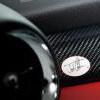 If you ask us what the best looking F66 MINI Cooper is to date, the answer is easy. It is the Elie Saab Cooper S. Not just because of the sculptural copper to bronze gradient paint. But because of how its designers completely reimagined the interior, bringing warmth, tactility and an organic quality back to a cabin that can otherwise feel stark in standard form. MINI has always flirted shamelessly with the fashion world. From the tailored cool of Swinging London in the 1960s to modern runway adjacent collaborations, the brand understands that style is inseparable from identity. Of all the fashion collaborations in recent memory, this one stands apart because it did more than dress up the exterior. It reshaped the atmosphere of the car itself. Created for the 2025 amfAR Gala in Salzburg, the one off was based on the new F66 Cooper S. Mechanically, nothing changed. Under the hood sits BMW’s B48 2.0 liter turbocharged four cylinder producing 204 hp, the same powertrain we explored in our full F66 Cooper S review on MotoringFile. No extra boost, no hidden tricks. This was a design exercise, pure and unapologetic. The exterior wore a custom metallic gradient that faded from liquid copper through soft bronze into a muted nude tone. In lesser hands this could have felt gimmicky. Instead, it highlighted the F66’s smoother, more simplified surfacing in a way standard colors sometimes struggle to do. The light catches the curves and gives the car a sculptural presence that feels intentional rather than ornamental. The 18 inch Slide Spoke wheels, finished in the same finish and subtly etched with Elie Saab branding, struck a rare balance. Rare because wheels finished in a car’s exterior color is hard to pull off. But here the result is stunning elegance. But it is inside where this collaboration truly separated itself from the standard F66. The production F66 has leaned heavily into Vescin and recycled textiles as part of MINI’s sustainability push. Admirable, certainly. But for some, the move away from leather introduced a cooler, more technical atmosphere that bordered on austere. The Elie Saab car quietly pushed back. High quality brown leather wrapped the seats and door panels, quilted with Saab’s monogram and finished with a level of depth and tactility absent from the standard materials. In place of Vescin and woven textiles, there was grain, scent, and subtle imperfection. It brought warmth and an organic quality back to the cabin, softening the sharp digital minimalism of the circular OLED display and simplified dashboard. The effect was transformative. Where the standard interior can feel almost aggressively reductive, this one felt curated and human. The leather absorbed light rather than reflecting it. It invited touch rather than simply presenting a surface. Then there was the scent. Saab’s fragrance Golden, developed with Culti Milano, was integrated into the cabin via a small leather wrapped cushion near the steering wheel, releasing notes of bitter orange and cedarwood. It may sound indulgent, even theatrical. But it reinforced a fundamental truth about MINI: these cars are emotional objects. They are meant to engage more than just your right foot. Importantly, the car was created for auction at the Salzburg gala, with proceeds supporting amfAR’s HIV and AIDS research programs. Like other philanthropic one offs MINI has supported over the years, it was less about previewing an options package and more about making a cultural statement. Freed from cost targets and sustainability mandates, the F66 design language was allowed to stretch in a different direction. The gradient paint added tension to the simplified exterior graphics. The rich leather interior reintroduced warmth and tactility. The whole car felt more resolved, more balanced. Is it flawless? Of course not. The F66’s larger footprint and cleaner lines remain a departure from the playful intricacy of the R56 or R53, a shift we’ve discussed before. Some purists will always miss the previous generation’s cheekier detailing. But taken as a complete visual and sensory statement, the Elie Saab Cooper S unified the new MINI philosophy in a way few other builds have managed so far. It proved that beneath the sustainability narrative and digital sheen, the F66 platform can still deliver intimacy, theater, and charm. For a brand that has always balanced tailoring with torque, that feels exactly right. The post A Look Back at the Best Looking F66 MINI Cooper Yet, The Elie Saab One Off appeared first on MotoringFile. View the full article
 -
For some MINI owners, hands off, eyes off driving has always felt fundamentally off brand. The joy of a MINI is not in disengagement. It is in the tactility, the immediacy, the sense that the car is working with you. So when BMW unveiled Level 3 autonomy, promising legally sanctioned eyes off motorway driving, it raised an uncomfortable question: is this the future of MINI? Perhaps. But only at the margins and, as it turns out, not anytime soon. According to Automotive News, BMW will discontinue its Level 3 “Personal Pilot L3” system in the upcoming facelift of the 7 Series. Instead, the company will focus on a more advanced and widely deployable Level 2 driver assistance suite. This may sound like a niche move on a low-volume product but it’s an interesting shift. What BMW Is Changing BMW introduced its Level 3 system in 2024 on the 7 Series in Germany. It allowed drivers to take their eyes off the road in tightly defined conditions, primarily low speed motorway traffic under strict parameters. Technically, it worked as advertised. Commercially, it struggled. The system operated only on approved motorways, at limited speeds, and only in certain countries. Add a reported price of roughly 6,000 euros and customer adoption remained modest. With the 7 Series Life Cycle Impulse arriving in 2026, BMW will remove the Level 3 option entirely. In its place will be a significantly enhanced Level 2 system derived from the Neue Klasse technology stack. This upgraded system will allow hands free driving at higher motorway speeds in approved conditions, along with automated lane changes and more sophisticated traffic assistance. The key difference is legal responsibility. The driver must remain attentive. For most owners, that distinction changes less than you might think. Why Level 3 Is On Pause Level 3 autonomy sounds revolutionary. In practice, it remains niche. First, cost. True Level 3 requires lidar, redundant braking and steering systems, powerful onboard computing, and enormous validation work. That hardware adds expense and complexity to cars that are already technological ecosystems on wheels. Second, regulation. Approval varies by country and sometimes by region. Liability questions are still evolving. Scaling Level 3 globally is neither simple nor inexpensive. Third, real world use. A system that works only in slow moving motorway traffic is impressive in a demo, less transformative in daily life. BMW is not alone in reassessing. Across the industry, enthusiasm for near term Level 3 deployment has cooled as manufacturers measure return on investment against actual customer demand. MINI’s current Level 2 Assisted Driving Plus Reviewed Why This Matters for MINI For MINI, this decision aligns almost perfectly with the brand’s ethos. For one MINI isn’t going to debut cutting edge tech due to cost. So leaning into proven offerings and refining them makes sense for the brand. Modern MINIs already benefit from BMW Group’s advanced Level 2 systems, including adaptive cruise control, lane assistance, and traffic jam support. As we have covered in our reviews, including our deep dives into the latest generation models, these systems have matured rapidly and now deliver a surprisingly seamless motorway experience without diluting the MINI character. If BMW is doubling down on scalable, sophisticated Level 2 tech, MINI owners stand to gain. Lower costs, broader availability, and features that work in more markets and more real world conditions. In other words, useful tech instead of headline tech. Level 2+ in BMW’s new iX3 The Bigger Picture for BMW Group This does not signal the end of autonomous ambition. BMW’s Neue Klasse architecture is built around massive computing capability and software scalability. When Level 3 becomes practical, affordable, and globally harmonized, the hardware foundation will already be in place. For now, Munich is choosing pragmatism over spectacle. There is something refreshingly BMW about that. The company has always blended innovation with engineering discipline. It rarely chases technology for the sake of marketing theater. For MINI fans, the takeaway is simple. Expect smarter assistance, not robo chauffeurs. Expect systems that reduce fatigue on a long motorway haul but still leave the fun parts, the bends, the back roads, the moments that matter, squarely in your hands. In an industry that has often over promised autonomy, this feels less like retreat and more like maturity. And if there is one thing MINI has taught us over the decades, it is that driving still matters. The post BMW Pauses Level 3 Rollout – What It Might Mean for MINI Autonomous Driving appeared first on MotoringFile. View the full article
-
Germany’s Handelsblatt reported this week that BMW and the European Commission are in active discussions over a minimum pricing model for Chinese-built MINI electric vehicles sold in Europe. Instead of paying punitive EU tariffs on China-made EVs, BMW could agree to a confidential minimum import price. In trade policy language, it is called a price undertaking. In business language, it is called survival with dignity. For MINI, this matters more than it might first appear. Why the EU Tariffs Were a Problem for MINI The current generation electric MINI Cooper and Aceman are produced in China through BMW’s Spotlight Automotive joint venture. When the European Union imposed additional tariffs on Chinese EV imports, it put MINI in a uniquely awkward position. Unlike some Chinese brands entering Europe for the first time, MINI is a legacy European brand with pricing expectations, dealer networks, and established customer benchmarks. Slapping tariffs on top of already tight EV margins is not just a spreadsheet problem. It is a brand positioning problem. Electric MINIs are not budget cars. They trade on design, heritage, and driving character. A sudden price spike risks pushing them into BMW i4 territory or into uncomfortable overlap with premium small EVs from brands like Tesla and Volvo. And MINI buyers are many things, but indifferent to value they are not. The J05 Aceman and the J01 Cooper SE What a Minimum Price Agreement Actually Does A price undertaking allows BMW to commit to not selling below a certain threshold. In exchange, the EU could waive or reduce tariffs. It is essentially Brussels saying: we are less concerned about unfairly low prices distorting the market than we are about maintaining competitive balance. This kind of agreement protects both sides. The EU can claim it is defending domestic manufacturers. BMW avoids the blunt instrument of tariffs that erode margins or force price hikes. For MINI, this is potentially transformative. How This Protects MINI’s Profitability Electric vehicles already carry thinner margins than comparable internal combustion models. MINI has historically operated on tighter profitability than BMW’s core models, relying on scale and shared architectures to make the math work. You can trace that tension all the way back to the early BMW-era R50, when cost constraints shaped everything from interior plastics to option packaging. Today’s electric MINIs sit on a dedicated EV platform co-developed in China. Development costs are high. Battery costs remain volatile. Add tariffs and suddenly every car sold becomes a political surcharge. A minimum pricing deal stabilizes the equation in three key ways: Margin PreservationWithout extra tariffs, BMW avoids either absorbing the cost or passing it directly to customers. Both scenarios hurt. Maintaining predictable import economics allows MINI to price confidently against rivals. Brand IntegrityMINI cannot afford to become the “expensive small EV that used to be fun.” Its entire mythology rests on accessible premium character. Protecting price positioning keeps the Cooper and Aceman in their intended competitive set. Dealer StabilityEuropean dealers have already navigated supply chain chaos, electrification mandates, and shifting incentive programs. A stable pricing framework reduces volatility and protects showroom traffic. The Bigger Strategy Behind the Scenes This negotiation is not happening in a vacuum. It reflects BMW’s increasingly delicate production calculus as MINI straddles China, the UK, and the broader European market. Back in 2023, BMW announced plans to bring electric MINI production to Oxford, a symbolic and strategic move that would have re anchored EV manufacturing in the brand’s spiritual home. We covered that initial commitment in detail on MotoringFile. But as we reported in early 2025, those plans have since been paused amid market uncertainty, shifting EV demand, and broader cost pressures. That pause changes the equation. In the short to medium term, China built electric MINIs are not a supplement to European production. They are the strategy. The Cooper Electric and Aceman flowing out of Spotlight Automotive are central to MINI’s EU electrification push. Walking away from them is unrealistic. Pricing them uncompetitively because of trade penalties is equally untenable. This is where a minimum price agreement becomes more than a trade footnote. It effectively buys MINI time. Time to stabilize margins. Time to reassess Oxford’s electric future. Time to navigate a cooling EV market without detonating profitability in one of its most important regions. In other words, until Oxford comes back into the electric picture, China is carrying more of MINI’s European future than anyone in Munich probably envisioned a few years ago. A Slightly Ironic Twist There is something faintly ironic about a British-born, German-owned brand building cars in China and negotiating with Brussels to preserve margins in Europe. The original Mini was an exercise in radical efficiency. Today’s MINI requires international diplomacy. But in a world where battery supply chains stretch across continents and trade policy can rewrite profit forecasts overnight, this is the new normal. For European MINI enthusiasts, the practical takeaway is simple: if this deal goes through, it likely prevents sudden price hikes on the electric Cooper and Aceman in the EU. It keeps MINI competitive without resorting to desperate discounting or awkward repositioning. In other words, it allows MINI to focus on what it should be doing: building characterful small cars that feel bigger than their footprint. And if Brussels and Munich can agree on a number that keeps accountants and enthusiasts equally calm, that may be one of the more quietly important victories in MINI’s modern electric chapter. The post Electric MINI’s from China May Soon be Imported With Tariffs Exemptions in the EU appeared first on MotoringFile. View the full article
-
Just one week after unveiling its latest GP inspired special edition, MINI is back with another heritage play. The new MINI 1965 Victory Edition is a design focused, appearance driven package with no performance upgrades, offered across the F66 Cooper S, F66 John Cooper Works and J01 John Cooper Works Electric. Like most of MINI’s recent special editions, this is about storytelling through specification rather than rewriting the spec sheet. But make no mistake, this one is a story worth telling. Few places are as central to MINI’s mythology as Monte Carlo. In 1965, Timo Mäkinen and co-driver Paul Easter steered a Mini Cooper S to victory at the Monte Carlo Rally, cementing the brand’s reputation for agility and ingenuity against far more powerful rivals. The 1965 Victory Edition attempts to visually reconnect the current generation to that icy triumph. It does so without altering the underlying mechanical formula. The F66 Cooper S retains its 204 hp and 300 Nm from the 2.0 liter TwinPower Turbo four cylinder. The F66 JCW continues with 231 hp and 380 Nm while the J01 JCW Electric delivers 258 hp. These are the same setups we’ve driven before and you can read reviews of: F66 Cooper S | F66 JCW | J01 JCW The special edition will be available as of March 2026 in all participating markets, including the U.S. Offered in limited numbers. In the U.S. the 1965 Victory Edition will be available in JCW form only and will sell for $46,220 plus $1,175 Destination and Handling. Exterior: Rally Heritage with Modern Aesthetics Finished exclusively in Chili Red, the 1965 Victory Edition wears a white stripe that runs from bonnet to roof and down the rear, a clean graphic gesture that echoes 1960s rally liveries. A white 52 graphic adorns both sides, referencing the number carried by the 1965 winner. Ironically the most exclusive aspect of the 1965 Edition is the fact that you can finally get a JCW with a white roof. Elsewhere MINI has added a subtle 1965 marking on the C pillar and even a sticker inside of the door. Wheel options include 18 inch JCW Lap Spoke two tone designs, or JCW Mastery Spoke black wheels for the electric JCW. Floating hub caps and color matched JCW valve stems add interesting small details. Like the Paddy Hopkirk edition before it, the 1965 Victory Edition leans into color, graphics and historic references to create emotional lift. And like last week’s GP inspired model, it uses visual cues to tap into MINI’s competition DNA without altering the hardware underneath. Interior: Subtle Celebration Inside, the theme continues with restraint. Door sills feature white 1965 lettering over a red and black background. A dedication inside the door references the rally victory. The cabin is trimmed in the familiar JCW palette of anthracite and red, already one of the more focused environments in the lineup. Edition specific details appear at the 6 o’clock spot on the sport steering wheel and on the center console storage box, both wearing 1965 lettering. Even the key cap carries the victorious racing number, a small but effective daily reminder of Monte Carlo glory. Worth nothing that these trim pieces are all 3D printed rather than than the molds we’ve seen in the past. Our First Take Special editions have become a core part of MINI’s playbook. Each following a similar formula: established mechanical package layered with design driven elements. The 1965 Victory Edition fits squarely into that strategy. For some enthusiasts, the absence of performance upgrades will sting. But keep in mind that it’s a massive investment to bring any mechanical changes to a car not in the parts necessarily but in the required crash testing and certification process. This new special edition does add one unique element A Monte Carlo badge naturally invites fantasies of shorter gearing, a limited slip differential or a rally mode for the electric JCW. But MINI’s approach here is consistent with its recent heritage releases. The focus is on visual storytelling, exclusivity and emotional resonance rather than incremental horsepower. Available from March 2026 in participating markets, with Europe following in July 2026, the MINI 1965 Victory Edition stands as another chapter in the brand’s ongoing dialogue with its past. It is, unmistakably, an appearance package. Yet by tying today’s F66 and J01 models to one of the most important victories in MINI history, it gives owners a tangible link to 1965 every time they walk up to the car. In that sense, the 1965 Victory Edition does exactly what modern MINI special editions are designed to do. It wraps proven performance in a carefully curated piece of mythology, and lets the story do the heavy lifting. MINI 1965 Victory Edition Gallery The post MINI’s Latest Special Edition Rewinds to 1965 Monte Carlo Glory appeared first on MotoringFile. View the full article
-
In 2006, MINI USA did something that felt slightly unhinged and completely on brand. It invited owners to drive across the country in celebration of the new GP and called it MINI Takes the States. What started as a rolling love letter to the reborn brand quickly became the most important community ritual in modern MINI history. Now, twenty years later, MTTS is back, and for 2026 MINI USA is not simply repeating history. It is remixing it. A 20 Year Tradition, Reworked MINI USA has officially announced MTTS 2026 as a three weekend, nine city rally spanning California, New York, and Florida. Instead of one continuous coast to coast trek, this anniversary edition splits the adventure into three regional long weekends: DatesStateRouteOctober 2 to 4CaliforniaMonterey to Sonoma to Lake TahoeOctober 23 to 25New YorkBuffalo to Syracuse to Lake PlacidNovember 13 to 15FloridaFort Myers to Miami to Key West It is a structural shift that acknowledges something we have long observed on MotoringFile during past rallies. Not everyone can disappear for nine days, but plenty can carve out a long weekend. Accessibility, in this case, may be the smartest evolution MTTS has seen since its inception. If you need a refresher on just how far this event has come, our archive of MTTS coverage charts the transformation from scrappy cross country experiment to polished rolling festival. California: PCH to Tahoe The California weekend runs Monterey to Sonoma to Lake Tahoe. Expect stretches of the Pacific Coast Highway, a crossing of the Golden Gate Bridge, vineyard lined roads through Napa, and a climb over Carson Pass before looping the jewel of Lake Tahoe. Evening events include the SOMO Event Center and Palisades Tahoe. It is hard to imagine a more cinematic playground for a MINI, particularly the latest generation cars that have traded some rawness for refinement. The question, as always, is whether the roads will coax out the old mischief. New York: Water, Falls, and Mountains From Buffalo to Syracuse to Lake Placid, the New York rally traces Lake Ontario, brushes past Niagara Falls, and climbs into the Adirondacks. Evening stops include NBT Bank Stadium and Mt. Van Hoevenberg. Autumn in upstate New York might be the sleeper hit of the three. Crisp air, fall colors, and a few hundred MINIs carving through mountain roads is exactly the sort of sensory overload MTTS was built for. Florida: The Long Way to Key West The Florida leg launches in Fort Myers, crosses the state to Miami, and then heads south along the Overseas Highway and the Seven Mile Bridge to Key West. The closing event lands at the Key West Amphitheatre. Few drives in America feel as surreal as floating across the ocean toward Key West. For MINIs, cars that have always punched above their weight in personality, it is a fittingly theatrical finale. Looking Back: From GP Launch to Cultural Institution The first MTTS in 2006 celebrated the debut of the original GP, a car that has since become mythologized in MINI circles. That rally was equal parts road trip and brand statement. MINI was not just selling cars, it was selling participation. Over the years we have documented the spectacle and the substance. MTTS 2012 proved the event could scale nationally while maintaining its clubby spirit. MTTS 2014 sharpened the logistics and amplified the theatrics. By the time we covered MTTS 2018 and the more recent 2022 and 2024 editions, the formula had evolved into something closer to a traveling carnival with torque steer. In 2024, nearly 2,000 owners joined at least part of the nine day western run. An average of 650 MINIs launched each morning, a rolling mosaic of JCWs, Coopers, special editions, and the occasional well loved R53 that refuses to retire. The send offs became rituals, music pumping, coffee in hand, exhaust notes bouncing off canyon walls. When we covered past MTTS events, one theme kept resurfacing. Owners come for the roads, but they stay for the tribe. The R53 parks next to the latest electric MINI and suddenly the brand’s evolution makes sense. It is less about spec sheets and more about shared motion. Kate Alini, who participated in the very first 2006 rally and now leads marketing, product, and strategy for MINI USA, clearly understands this. Her emphasis on community and accessibility suggests that MTTS 2026 is not just an anniversary lap. It is a recalibration. Look Back and Looking Ahead Twenty years ago, MTTS was a bold experiment. In 2026, it is a legacy event with enough equity to reinvent itself. Will three shorter rallies feel different than one epic cross country odyssey? Absolutely. Some will miss the romantic absurdity of crossing multiple time zones in a single caravan. But the trade off, broader participation and three distinctly American backdrops, feels very MINI to us. And if history tells us anything, the best moments will not be the official ones. They will be the roadside conversations, the wrong turns that lead to better roads, the mechanical dramas solved with zip ties, optimism and complimentary MINI support coming to the rescue. Twenty years on, MINI Takes the States is still less about where you are going and more about who is going with you. For continued updates and deep dives into MTTS 2026, keep it tuned to MotoringFile. The post MINI Takes the States 2026: Three Weekends, Nine Cities, One Very Big Birthday appeared first on MotoringFile. View the full article
-
BMW Group has announced that Sean Green will assume the role of Vice President, MINI Region Americas, effective May 1, 2026. He succeeds Mike Peyton, who has decided to pursue opportunities outside the company after a decade leading MINI and BMW Motorrad in the Americas. BMW Group is famously rotational when it comes to leadership. Senior executives tend to move across brands, continents, and functions in a carefully orchestrated cycle. Munich to the U.S., BMW to MINI, Europe to Asia, and back again. It is part of how the company builds institutional depth. Against that backdrop, it is somewhat unusual, though not unheard of, for someone of Peyton’s stature to step outside the Group entirely rather than into another senior post within it. That distinction matters. There is no indication of abruptness as Peyton will stay on for two months to support the transition. If anything, Peyton’s tenure coincided with a period of stabilization and preparation that leaves MINI Americas better positioned for what comes next. Peyton brought with him experience from Harley Davidson and Ford, along with a steady operational focus. During his time overseeing MINI in the Americas, he worked to strengthen the dealer network, improve business fundamentals, and help guide the brand toward the launch of an entirely new product portfolio. That portfolio, spanning a fully renewed lineup and a significant push into electrification, represents the most comprehensive reset MINI has undertaken in the modern BMW era. It is not hyperbole to say that Peyton’s leadership helped create the conditions for that transition to land as cleanly as possible from a business perspective. His departure, then, feels less like disruption and more like the closing of a chapter. The heavy product lifting is largely complete. The structure is in place. The stage is set. Into that moment steps Sean Green Sean Green steps into that moment with more than three decades inside BMW Group. A native of England, he began as an apprentice technician at 16 and rose through roles in aftersales, marketing, and sales across both BMW and MINI. Most recently, he led BMW Group China, one of the company’s most strategically critical regions. Green’s connection to MINI is not merely professional. His first family car was a 1967 Mini 850, and he has been directly involved with the brand since its relaunch era in the early 2000s. That blend of institutional knowledge and personal affinity should serve him well. The Americas remain a defining market for MINI’s identity in the BMW era. The U.S. helped shape the brand’s modern resurgence, but it is also a market in transition. Consumer preferences continue to tilt toward crossovers, pricing pressures are real, and electrification is reshaping expectations. If Peyton’s chapter was about fortifying the business and preparing for a sweeping product renewal, Green’s may be about extracting the full potential from that investment. Retail execution, brand positioning, and profitability in a tighter market will define the next few years. Leadership transitions are rarely just about titles. They are about timing. In this case, MINI Americas moves from a steady external perspective to a deeply embedded BMW Group veteran at a pivotal moment. The cars are new. The strategy is clear. Now comes the hard part, making it all work in the real world. The post New Leaderships Takes the Wheel at MINIUSA as Mike Peyton Departs appeared first on MotoringFile. View the full article
- Ещё раньше
-
For now, the MINI Aceman is not coming to North America. That simple fact has made it easy for US and Canadian enthusiasts to shrug and scroll past the headlines. Electric only. Built in China. A Europe and Asia play. Interesting, sure, but not relevant. That assumption is increasingly looking shortsighted. As we explored in Why MINI’s Next Big Pivot Could Be a Gas Powered Aceman on MotoringFile, there are credible signs that MINI is evaluating a combustion powered Aceman for broader global markets. If that happens, the Aceman is no longer a regional curiosity. It becomes the missing piece in North America’s lineup, the car that slots precisely between the Cooper and the ever growing Countryman. Which makes now the right time to take it seriously. Because when you look at its size, positioning and intent, the Aceman is less an oddity and more a potential reset button for what a MINI crossover should be. The Car That Rebalances the Range The MINI Aceman sits between the Cooper and the Countryman, at least on paper. In practice, it represents something more nuanced. As detailed in The MINI Aceman: New Details and Photos Answer Your Questions and MINI Aceman In Depth: Size, Cost, Range and Where It Will Be Sold on MotoringFile, the Aceman is built on the Spotlight EV architecture and offered in E and SE forms, with output ranging from roughly 184 horsepower to over 215 horsepower. The Aceman JCW pushes performance further, marking MINI’s first true electric performance crossover. But numbers only tell part of the story. The bigger question is scale. Comparison: Aceman vs Other Four Door MINIs The original MINI Countryman was controversial at launch. Too big, said purists. Too practical, said everyone else. The Aceman is just 18 mm shorter than the R60 and rides on an 11 mm longer wheelbase. It is narrower and lower, but in footprint, it is almost a perfect echo of MINI’s first crossover experiment. In other words, the Aceman is roughly the size of the Countryman that North America once embraced as daring but acceptable. ModelsJ05 Aceman SE / ELECTRIC (’24-’31)F65 Cooper 5 Door / PETROL (’25-‘32)R60 Countryman All4 S / PETROL (’10-’16) F60 Countryman All4 S / PETROL (’17-’23)U25 Countryman SE / ELECTRIC (’24-’32)Length4079 mm / 161 in4,036 mm (158.9 in)4097 mm / 161.3 in4298 mm / 169.2 in4429 mm / 174.37 inHeight1514 mm / 59.6 in142.5 mm / 56.1 in 1562 mm / 61.5 in1557 mm / 61.3 in1613 mm / 63.5 inWheelbase2526 mm / 99.44 in2567 mm / 101 in2596 mm / 102.2 in2670 mm / 105.1 in2692 mm / 106 inWeight1710 kg / 3,770 lbs1355 kg / 2987 lbs 1455 kg / 3208 lbs 1605 kg / 3538 lbs2075 kg / 4,574 lbs The second generation MINI Countryman grew decisively. Compared to the Aceman, the F60 is 220 mm longer and 68 mm wider. Its wheelbase stretches 64 mm further. The F60 moved MINI firmly into mainstream compact SUV territory. It was roomier, more refined, and far more conventional. It sold well in North America precisely because of that. Back to front: the original R60, F60 and current U25 Countryman The Aceman pulls back from that expansion. It is more urban, more tightly packaged, more aligned with the brand’s historic footprint discipline. The current and third Generation Countryman (U25) Countryman is the largest yet and creates an even greater contrast in size. The U25 is 365 mm longer than the Aceman and nearly 150 mm taller. Its presence is substantial, its mission global and family focused.This is no longer a niche MINI. It is a full fledged compact SUV. And that creates the perfect space for the Aceman to fill. Why MINI Going Small is a Big Deal If MINI introduces a gas powered Aceman for global markets, as our reporting over the past year suggests, it would land in North America at almost exactly the size of the original Countryman. Not the current U25, but the R60 that once felt daring yet still unmistakably MINI. That alone reshapes how we should be thinking about this car. A combustion Aceman would neatly fill the widening gap between the Cooper 4 Door and the increasingly substantial U25 Countryman. It would give MINI dealers a more accessible crossover, one that prioritizes urban maneuverability and brand character over sheer interior volume. For buyers who find the new Countryman a bit too grown up, a bit too large, the Aceman could feel like a return to proportion discipline. More importantly, it would signal that MINI recognizes the tension in its own lineup. The brand has chased space and mainstream acceptance with each Countryman generation. The Aceman suggests a recalibration, a reminder that utility does not have to mean expansion. For North America, that could translate into a crossover that feels engineered around MINI’s identity first and market trends second. Today the Aceman is an electric crossover sold elsewhere. Tomorrow, if the pivot happens, it could become the most strategically important vehicle in MINI’s North American portfolio. The post MINI Aceman Dimensions: How It Compares to the Cooper and Countryman appeared first on MotoringFile. View the full article
-
Another week in MINI land, another reminder that the brand is at its best when it leans into myth and at its most frustrating when it monetizes it. If you felt a faint disturbance in the enthusiast force over the last seven days, you were not alone. Between GP nostalgia, off road renderings and a surprise legal plot twist in Washington, this was a week that said a lot about where MINI is headed and how it plans to get there. Let’s get into it. The GP Name Returns, Sort Of The big headline was the arrival of the new GP Inspired Edition for the F66 Cooper S. As we covered in detail on MotoringFile, the package brings visual nods to past GPs without delivering the mechanical fireworks that defined icons like the 2006 GP and the 2020 GP3. You can read the full breakdown here: The issue is not that the car looks bad. It does not. MINI knows how to apply decals and contrast trim with surgical precision. The issue is what the GP badge represents. Historically, GP meant something extreme, something slightly irrational. The R53 GP stripped weight and added focus. The GP3 turned torque steer into a character trait. Those cars were not merely appearance packages, they were statements. This new edition feels more like brand management than motorsport madness. It is nostalgia, curated and sanitized. And yet, here is the uncomfortable truth: it will probably sell just fine. MINI understands that mythology has value, even if engineering budgets are tighter than they were in 2020. The question is not whether MINI can still build a true GP. The question is whether it wants to. A Countryman That Actually Looks Ready for Dirt In a much more intriguing development, we published exclusive renderings of a potential off road focused Countryman. If you missed it, catch up here: For years, the Countryman has flirted with ruggedness without fully committing. Plastic cladding and marketing copy do not equal capability. What the latest imagery suggests is something more intentional, a lifted stance, more aggressive tires, a design language that finally matches the adventure narrative MINI loves to tell. The current Countryman, particularly in SE form, already stretches what we traditionally think of as a MINI. It is larger, heavier and more mature. Leaning into genuine light off road credibility could give it a clearer identity in a crowded crossover market. There is heritage to support it. MINI’s rally roots are not fictional. The classic Mini conquered Monte Carlo. The brand has real motorsport DNA. Translating that into a modern soft roader that can handle more than a Whole Foods parking lot would not be sacrilege. It would be evolution. The Tariff Cloud Lifts, At Least a Little In a development that could quietly reshape MINI pricing in the United States, the Supreme Court of the United States struck down large portions of the sweeping auto tariffs that had threatened to complicate import economics. For a brand like MINI, which relies heavily on European production, that matters. Tariffs do not just change sticker prices. They alter product planning, trim strategies and even which models make it to our shores. If the legal dust settles in a way that stabilizes import costs, MINI USA may have more flexibility than it did just a few months ago. That could mean sharper pricing, better option packaging or simply fewer awkward explanations at the dealership. The Beautiful Weird Side of MINI On the enthusiast fringe, one of just three David Brown electric Classic Mini eMastered cars surfaced for sale. Yes, that David Brown, now reimagined as David Brown Automotive, blending classic silhouettes with modern EV underpinnings. This is peak 2026 MINI culture. Hyper curated, beautifully executed and priced in a way that makes you question your life choices. We have seen restomods before. We have seen electric conversions. What makes projects like this fascinating is how they force us to ask what a classic Mini really is. Is it the A series engine buzzing away at 4,000 rpm, or is it the shape and the attitude? Purists will argue one way. Investors will argue another. Meanwhile, the rest of us will scroll through the listing and imagine a very different kind of garage. The Bigger Picture Zoom out and a pattern emerges. MINI is balancing three narratives at once: Myth, via badges like GP. Modern relevance, via EVs and larger crossovers. Market reality, shaped by global economics and legal rulings. Sometimes those narratives align beautifully. Sometimes they feel like three different departments that only speak via Slack. What remains consistent is this: the brand still inspires debate. That alone is worth something. When MINI becomes boring, we will have a problem. For now, it is still provoking, still experimenting, still occasionally missing the mark in ways that at least feel ambitious. And that, in its own slightly chaotic way, is very on brand. The post MINI Week in Review: GP Badge Drama, Countryman Goes Off Road and a Tariff Twist appeared first on MotoringFile. View the full article
-
On February 20, 2026, the U.S. Supreme Court struck down most of the sweeping tariffs imposed under the International Emergency Economic Powers Act. The decision effectively voids the 10 percent “reciprocal” tariff that had been applied broadly to imports from countries including Germany and the United Kingdom. For BMW Group, and specifically for MINI in the U.S., this is not an abstract legal debate. It will directly impact costs and potentially even prices for consumers. And for once, the math favors Oxford and Munich. The Tariffs That Hit MINI Directly nder the now-invalidated policy, imports from both Germany and the UK faced a 10 percent tariff. That matters because: The MINI Cooper is built in Oxford, United Kingdom. The MINI Countryman is built in Leipzig, Germany. With a 10 percent tariff layered onto the landed cost of every imported vehicle, MINI USA was absorbing or passing along thousands of dollars per car before the vehicle even reached a dealer lot. On a $30,000 Cooper, a 10 percent tariff equates to roughly $3,000 in additional cost. On a $40,000 Countryman, that is about $4,000. While transfer pricing, logistics, and currency complicate the exact numbers, the directional impact is clear. Tariffs were materially inflating MINI’s U.S. cost structure. As we have written before on MotoringFile, MINI operates in a price sensitive premium segment where elasticity matters. A few thousand dollars can shift perception from “quirky premium alternative” to “why is this so expensive?” What Changes Immediately First, the 10% tariff on future imports from Germany and the UK disappears unless replaced under a different legal authority. That means: Lower landed cost per Cooper and Countryman entering U.S. ports. Immediate improvement in gross margin if pricing stays stable. Or room to deploy incentives without destroying profitability. It is unlikely MINI will announce a sudden MSRP reduction across the board. Automakers rarely volunteer margin. More realistically, we will see: Targeted lease support on Cooper and Countryman. Tactical incentives in competitive regions. Improved dealer margin flexibility. Given MINI’s U.S. volume realities, the brand needs profitability as much as it needs growth. This ruling provides breathing room on both fronts. BMW Group’s Broader Cost Relief BMW Group’s situation is more complex. Yes, BMW builds most of its U.S.-market SUVs in Spartanburg, South Carolina. But it still imports: 3 Series, 4 Series, 5 Series, 7 Series sedans from Germany. EVs like the i4 and i7 from German plants. Engines, transmissions, electronics, and modules for U.S. assembly. The 10 percent tariff applied to those German imports as well. Removing it lowers: The cost of fully built imported BMW sedans and EVs. The cost of German-sourced components for Spartanburg-built SUVs. That second point is critical. Even vehicles assembled in South Carolina carried embedded tariff cost through imported components. The ruling improves cost competitiveness not only for imported cars but also for American-built BMWs. For more on how BMW’s U.S. manufacturing footprint works, revisit this deep dive The MINI Cooper vs. Countryman Dynamic This is where the UK and Germany split matters. The Cooper, built in Oxford, carried the same 10% tariff as the German-built Countryman. But the Cooper sits lower in the price hierarchy and competes more directly with vehicles from Acura, Mazda, and Volkswagen. That means tariff relief could have a proportionally larger strategic impact on the Cooper. It restores room for competitive lease pricing, which has historically been MINI’s secret weapon in the U.S. The Countryman, now larger and more premium than ever, competes closer to entry-level BMW and Audi crossovers. Here, BMW Group may be more inclined to preserve margin rather than chase volume. If refunds for previously paid tariffs become available, that could provide an additional short term financial boost. But the more important impact is forward looking: predictable cost structure. What This Does Not Do This ruling does not: Guarantee permanent tariff immunity. Congress retains authority, and other trade statutes remain available. Automatically drop sticker prices tomorrow. Solve broader currency or logistics pressures. What it does is remove a blunt 10 percent tax that distorted MINI’s U.S. pricing calculus at a fragile moment in the brand’s relaunch. The Bottom Line For MINI USA, the Supreme Court’s decision effectively removes a 10 percent surcharge on every Cooper from the UK and every Countryman from Germany entering the U.S. That is meaningful. It improves margin, restores pricing flexibility, and gives BMW Group North America clearer cost visibility in a volatile market. In a segment where perception and price walk hand in hand, eliminating that tariff may not transform MINI overnight. But it removes a weight the brand did not need. And in today’s premium small car market, even a few thousand dollars can mean the difference between charming and overpriced. The post Supreme Court Ends US Auto Tariffs. What It Means for MINI Prices appeared first on MotoringFile. View the full article
-
On queue the automotive press is catching up with news that we broke a year ago. MINI is preparing to launch a more off-road focused Countryman in hopes of both expanding the range and appeal of MINI’s largest product. That confirmation comes courtesy of Holger Hampf, who recently told Motor1 that the current MINI Countryman “hasn’t played all of its cards yet.” He pointed to a growing global appetite for outdoor independence and lifestyle-driven vehicles, signaling clearly that MINI intends to lean further into that space. The MINI Countryman rendered with it’s new off-road package That will sound familiar if you read MotoringFile regularly. We had been hinting at an off-road Countryman since the launch of the U25. However a year ago we got further confirmation that MINI was working on a new variant of the Countryman that would have more off-road capability. Our sources outlined a subtle suspension lift, unique wheel designs, more rugged exterior trim, and all terrain tires to give the car a more purposeful stance without turning it into a caricature of an overlander. As you can see in these exclusive renders, the modified Countryman wouldn’t be a dramatic departure to what’s on showroom floors today. But it would signal a slightly different level of off-road capability to the standard car. And before anyone rolls their eyes at the idea of a “rugged” MINI, let’s remember something. The U25 Countryman already leans toward versatility. The idea of giving it a tougher aesthetic and a bit more real-world capability simply acknowledges where the segment is headed. It’s also something that MINI is proving out in real-time with its recent Countryman JCW entry into the America Rally Association. Last year we took a standard JCW Countryman deep into the mountains of Montana for a proper dirt road evaluation. Loose gravel, elevation changes, long stretches of washboard surface. Not a mall parking lot, not a curated influencer trail. The experience was amazing. The Countryman handled it with composure and surprising confidence. The biggest limitation (naturally) were tires and a more compliant suspension with longer travel. The takeaway was simple. The hardware is either there or easily added. But what it will also need are the visual queues that mark this as a new offering. That is where this new off road focused version comes in. The MINI Countryman rendered with it’s new off-road package Hampf’s comments suggest MINI understands that outdoor identity is no longer niche. It is mainstream aspiration. Customers want vehicles that suggest escape, even if most of their adventures end at a trailhead rather than a rock crawl. A lifted stance, chunkier tires, and dedicated trim would give the MINI Countryman that visual confidence. Importantly, this is not about turning MINI into Jeep. It is about sharpening the Countryman’s positioning in a crowded compact SUV segment. The U25 is already the brand’s best seller globally. Expanding its personality while broadening its appeal is simply smart product strategy. The MINI Countryman rendered with it’s new off-road package In other words, this is less a pivot and more a fulfillment of what the MINI Countryman has quietly become. Larger. More capable. More mature. And now, potentially, a bit more adventurous. As the broader automotive press begins connecting the dots (a little late), the narrative becomes clearer. The MINI Countryman still has cards to play. And one of them is covered in dust. The post MINI Countryman Off-Road Model Confirmed, Exclusive Renderings Inside appeared first on MotoringFile. View the full article
-
There are rare MINIs. There are bespoke MINIs. And then there is this: one of just three right hand drive David Brown Mini eMastered examples ever built, now quietly listed for sale. When we first covered the launch of the all-electric Mini eMastered by David Brown Automotive, it felt like an audacious footnote in the MINI story, a modern coachbuilder taking the Issigonis blueprint and rewriting it with electrons instead of SU carbs. Now, one of those three cars has surfaced on Pistonheads. And it might be one of the most compelling electric MINIs ever built. At its core, the eMastered starts with an original classic Mini shell. But to call it restored would be like calling a Savile Row suit “tailored.” Every panel is reworked. Every seam is considered. Tolerances are tightened. Paint finishes feel deep enough to swim in. David Brown Automotive, best known for its Speedback GT, applies the same philosophy here: honor the past, then quietly perfect it. The chrome is jewelry-grade. The stance is subtly modernized. The details, from flush lighting to bespoke trim, elevate the familiar shape without distorting it. A Coachbuilt Electric Classic Mini The eMastered begins life as an original classic Mini shell, but from there it becomes something closer to automotive haute couture. Panels are reworked. Gaps are tightened. Paint is layered and polished to a depth that would shame most modern luxury cars. David Brown Automotive, known for its meticulous, low-volume builds, treats the Mini not as a nostalgic toy but as a design object worthy of reinvention. The result is familiar yet elevated. Chrome is crisp. Lighting is subtly modernized. The cabin feels tailored rather than restored. Crucially, it still reads instantly as a Mini. No exaggerated flares. No visual gimmicks. Just a cleaner, sharper evolution of an icon. 72 kW, Instant Torque, Zero Drama Beneath the classic silhouette sits a 72 kW electric motor. On paper that number sounds modest. In a lightweight Mini, it transforms the car. The experience shifts from mechanical chatter to smooth, immediate torque. It is brisk rather than brutal, which feels entirely appropriate. This is not a drag-strip novelty. It is a usable, daily-friendly electric classic Mini that retains the car’s compact agility while eliminating the quirks that once defined ownership. Where It Sits in the MINI Universe The original 1959 Mini democratized clever engineering. Modern BMW-era MINIs premiumized it. The eMastered takes a third path: electrified craftsmanship. It is not factory. It is not officially MINI. But it captures a question the brand itself is wrestling with as it moves deeper into EVs: how do you carry heritage forward without becoming trapped by it? The David Brown Mini eMastered answers that with leather, lacquer, and lithium-ion cells. This is not for the concours purist or the dyno-sheet hero. It is for someone who loves the mythology of the Mini but wants modern drivability, total opulence and ultra exclusivity. Happy bidding (PistonHeads) The post Ultra-Rare David Brown Electric Classic Mini for Sale appeared first on MotoringFile. View the full article
-
There is something slightly surreal about the F66 MINI GP Inspired Edition. It is a special edition that celebrates a car that does not exist. Not in this generation, anyway. When MINI rolled out similar GP Inspired and GP Pack models during the F56 era, the logic was clean. The third generation GP had just detonated onto the scene with 306 horsepower, wild fender flares and Nürburgring credentials. The visual shorthand was fresh. The hype cycle was still warm. You could walk into a showroom, see a GP Inspired JCW, and mentally connect it to the recently sold out halo car. But the F66 is a different story. There is no new GP. No widened arches. No angry aero. No limited run, no lap time headlines, no carbon fiber rear seat delete. The last GP is now more than six years in the rearview mirror. That is an eternity in automotive product cycles. So yes, it feels like a stretch. The GP Inspired Edition Details The edition is available in most markets (UK being an exception) on the F66 JCW and Cooper S and F65 Cooper S. Each will include unique graphics and a 3D-printed fob backer. Elsewhere, it leverages existing accessories (aero add-ons and red wheel center caps) to bring a bit more aggressiveness to the standard JCW look. Brand Mythology vs Product Reality On one hand, MINI is trading on mythology. The GP name carries weight that far exceeds its production numbers. From the R53 GP to the F56 GP, these cars were never about volume. They were about statement. They were about showing that this cheerful British hatch could, when properly caffeinated, embarrass far more serious machinery. That mythology does not evaporate just because a new generation arrives. Porsche still references the 911 Carrera RS decades later. BMW still invokes the E30 M3 like it was unveiled yesterday. Performance icons have long half lives. In that sense, the F66 GP Inspired Edition is a reminder. It says, remember when we did this? Remember when we built the most extreme front wheel drive MINI ever? Screenshot Screenshot But here is the tension. When the F56 GP Inspired models launched, they were adjacent to a living, breathing halo car. Customers knew what they were nodding toward. Today, the F66 version references a ghost. For new buyers, especially those entering MINI for the first time in the electric age, the GP may be little more than a footnote on YouTube. But there is another way to look at it. The F66 generation launched without an immediate, outrageous flagship. The JCW models are competent and quick, but they are not shock and awe machines. The brand’s energy has been split between electrification and reinvention. In that context, the GP Inspired Edition may be less about celebrating a specific past car and more about keeping the performance flame alive during a transitional moment. It is a visual anchor. It signals that John Cooper Works still means something, even if the next extreme JCW has yet to appear. Still, the timing is curious. Special editions work best when they feel reactive and urgent. This one feels archival. The 2021 MINI JCW Clubman GP Edition Aesthetic Value vs Authenticity To be clear, as an appearance package, the GP Inspired Edition works. The forged wheels, blacked out trim, GP badging and motorsport detailing give the F66 3 Door real presence. For buyers who want the attitude without the compromises of a stripped out special, it makes practical sense. But authenticity matters in enthusiast culture. MINI has always walked a fine line between playful branding and serious performance credibility. When it references a car that has been gone for over half a decade without offering a new halo to back it up, it risks feeling like it is coasting on past glory. Is that fatal? No. Is it noticeable? Absolutely. The 2021 MINI GP Inspired Edition was finished in the GP’s exclusive paint color The Verdict: Smart Bridge or Nostalgic Reach? Yes, it is a stretch. There is no current GP anchoring this edition to a live halo product, which makes the reference feel more historical than immediate. But it is also strategic. The GP remains one of the strongest performance narratives MINI has created. Keeping that visual language alive may be less about looking backward and more about reminding enthusiasts that the spirit is still there. If a new GP arrives for the F66, this becomes clever foreshadowing. If not, it risks feeling like Piano Black nostalgia. Either way, it signals one thing clearly: MINI knows the GP myth still matters. The post The MINI GP Inspired Edition Arrives Without a GP to Inspire It appeared first on MotoringFile. View the full article
-
For the past several years, MINI has framed its future around electrification. But if you have been following our reporting, you know the story is evolving. Now, MINI appears ready to expand its lineup with a gas-powered MINI small SUV positioned below the Countryman. Yes, you read that correctly. According to sources, MINI is actively working on an internal combustion SUV to be positioned below the Countryman and will likely be called the Aceman. The original Aceman, launched a year ago as an EV-only crossover was envisioned to eventually be MINI’s best selling model globally. However with EV sales cooling in some markets due to lagging infrastructure and elimination of subsidies, MINI is rethinking its ICE model strategy. With Chinese tariffs in North America and now Europe, MINI is also looking at more cost effective ways to bring the Aceman to the masses. Expect a gas powered Aceman to be roughly the same size as the current Aceman EV and the F65 five door Cooper. Where This New MINI Small SUV Fits in the Lineup The current Countryman has grown in size, price, and ambition. It is no longer the quirky outlier it once was. It is a proper compact SUV, with pricing that reflects its maturity. That growth leaves room beneath it. A new MINI small SUV, slightly smaller and more affordable than the Countryman, would give the brand a true entry point in the crossover space. For many buyers, especially in North America and parts of Asia, that sweet spot matters more than whether the powertrain runs on electrons or octane. Why a Gas-Powered MINI Small SUV Makes Sense When MINI introduced the Aceman, it did so as an EV statement. The message was clear: urban, electric, forward-looking. But as we detailed in our coverage of MINI’s next five-year product strategy on MotoringFile, EV adoption is not uniform. Incentives fluctuate. Charging infrastructure remains inconsistent. Consumer confidence is uneven. A gas-powered MINI small SUV is not a retreat. It is a hedge. BMW Group’s flexible architectures allow for multi-energy platforms, making it possible to add combustion power without starting from scratch. That keeps development costs in check while broadening global appeal. In practical terms, it means MINI can sell the same design language and core package to both EV-friendly cities and regions that still rely heavily on internal combustion. However it’s unclear what platform the gas powered Aceman would be built on. It would be logical to base it on the revised UKL platform that underpins the Cooper. That would likely align well with the Aceman EV in terms of size and cost. However that would also mean it would be front wheel drive only as the Cooper’s platform wasn’t engineered for AWD. The alternative would use the Countryman’s more modern FAAR platform. However that might make the gas powered Aceman too close in size and price to the Countryman it would sit below. The other question would be production location. If the gas powered Aceman is indeed based on the Cooper platform, it would likely mean we’d see production at MINI’s Oxford Plant. If MINI goes with the larger FAAR platform, there would be more options on the table which might be rather appealing. the new gas powered Aceman will likely be about the same size as the original R60 Countryman A Smaller MINI SUV vs Countryman Just how small will this new SUV be? If the new gas powered Aceman is intended to align with the current EV version, we have a good idea. The current J05 Aceman is very close in size to the original R60 Countryman originally released in 2010 and slightly larger than the current four door Cooper. This means this new model would be slightly shorter, narrower and lower than the Countryman. Specifically expect a bit less room in the year seats and boot. The gas powered Aceman will likely be similar in size to the five door Cooper but offer a higher, crossover seating position. As with the rest of MINI’s gas range, we’d expect a Cooper and Cooper S. Unlike the current F65 Cooper five door, we’d be surprised in MINI didn’t offer this new gas powered Aceman in full JCW form. Perhaps the biggest distinction (beyond the size difference) between this new SUV and the Countryman would be which wheels are driven. We expect MINI to only offer this new gas-powered Aceman as a front-wheel-drive model to keep costs low and create more space between it and the Countryman. In other words, this would not cannibalize the Countryman. It would complement it. The Bigger Picture MINI once suggested it would become an all-electric brand early next decade. That timeline now looks more flexible than fixed. The reality is simple: global markets move at different speeds. Adding a gas-powered MINI small SUV acknowledges that truth without abandoning the brand’s electric ambitions. If executed properly, with the sharp handling and personality we expect, this model could become one of the most important vehicles in MINI’s next chapter. Not because it is revolutionary, but because it is realistic and what the market is looking for. And in today’s market, realism may be MINI’s boldest move yet. The post New MINI Small SUV to Add New Gas Powered Option Below the Countryman appeared first on MotoringFile. View the full article
-
There are plenty of memorable MINI Cooper commercials. But in 2017, the brand produced one that stood apart. A short film set in 1964 Monte Carlo that redefined how MINI talked about its past. And yet today, it is largely forgotten. Commissioned to elevate the John Cooper Works sub brand, Faith of a Few unfolded less like an ad and more like a short film. Set in 1964 Monte Carlo, it captured John Cooper’s unlikely mission to turn a modest city car into a rally giant killer. The history is well known to MotoringFile readers. The classic Mini stunned the motorsport establishment by winning the Monte Carlo Rally in 1964, 1965 and 1967. And then there was 1966, the infamous disqualification that many still argue was more politics than parity. Rather than leaning into nostalgia, MINI and agency Jung von Matt crafted something sharper. The film opens with skepticism and resistance. Cooper’s idea is dismissed. The MINI is underestimated. Yet the narrative builds tension around belief and defiance. The car is not presented as cute or retro. It is presented as disruptive. Produced by Anorak Film and backed by Mini Sport, which readied a replica of 33 EJB for the shoot, the film commits fully to authenticity. Every frame, from the frozen mountain passes to the service park scenes, feels lived in. It does not watch like an ad. It watches like a rally film. The campaign arrived during a period when MINI was working to give the John Cooper Works name clearer definition. JCW needed to be understood as more than a trim package. It needed to reconnect modern buyers to the brand’s motorsport DNA. This film brought that rich history to the public in a way that we had never seen before. The industry responded. In 2018, the film earned multiple Gold and Silver Lions at Cannes. For a MINI Cooper commercial rooted in 1960s rally history, that is no small achievement. And yet, despite the awards and the craftsmanship, the film quietly faded from broader conversation. And in North America, was almost never aired. That is unfortunate. In under two minutes, it pulled off a trick most modern automotive marketing struggles with. It turned history into conviction. MINI’s reputation was not built on design quirk or metropolitan cool. It was earned on cold Alpine stages where brains routinely outmaneuvered horsepower. As MINI evolves through electrification and digital transformation, the question remains familiar. What does performance mean for MINI Cooper today? Is it numbers, or is it attitude? This forgotten commercial offered a clear answer. Performance is conviction. And conviction, when paired with a small car and the right mountain road, can change history. The post Faith of a Few: Is This the Best MINI Cooper Commercial Ever Made? appeared first on MotoringFile. View the full article
-
Head of MINI Design on Touchscreens vs Physical Buttons
тема опубликовал DimON в Новости MotoringFile
There is a quiet course correction happening inside the modern dashboard. For the last decade, the industry convinced itself that screens were the inevitable future. Bigger meant better. Fewer buttons meant progress. Glass replaced switchgear in the name of minimalism. And yet, somewhere between buried climate menus and fingerprint-covered control panels, drivers began asking a simple question: can we have our buttons back? Recently, our friends at Motor1 sat down with MINI’s newest head of design, Holger Hampf, who assumed the role in 2024. What emerged from that conversation was not a rejection of digital interfaces, but a more nuanced philosophy, one that could define the next chapter of MINI interior design. “I think it’s a general trend that some customers are asking to bring physical buttons back,” Hampf told Motor1. “For MINI, I believe it’s a very good thing, because we are looking for that mix of digital interface and physical affordances.” That word, affordances, matters. It is design language for something that invites use. A toggle that wants to be flipped. A rotary knob that encourages interaction without demanding your eyes. MINI, more than most brands, has historically thrived on those tactile invitations. Left; official MINI R50 after sales navigation accessory. Middle; standard R53 interior. Right; optional R50/R53 factory navigation From the original 1959 Mini’s charmingly exposed switchgear to the aviation-inspired toggle row introduced under BMW ownership, MINI interiors have always been about theater as much as function. Even when ergonomics occasionally missed the mark, the cabin never felt anonymous. The challenge today is avoiding anonymity in the OLED era. As we have documented in our coverage of MINI’s latest generation interiors on MotoringFile, the brand has leaned heavily into a central circular display, reinterpreting Alec Issigonis’ original center speedometer for the digital age. It is a bold move, one that positions MINI firmly in the modern EV conversation while retaining a visual link to its past. The 2010 R56 and the 2025 F66 But Hampf is clear that digital dominance alone is not the goal. “It’s of the utmost importance to find a good balance between digitality and an analogue experience,” he said. “If you go too digital, you lose the connection or the character that the brand is known for… we always need to retain that analog quality that a MINI is known for.” That statement lands differently in 2026 than it would have in 2016. The industry has seen what happens when touchscreens go unchecked. Even Ferrari is recalibrating. In our latest piece, Ferrari’s Bold UI Move Is the Lesson BMW and MINI Can’t Ignore, we explored how Ferrari is rethinking its radical interior interface strategy after discovering that too much digitization can dilute emotional engagement. The parallels are instructive. Ferrari is wrestling with preserving drama in a supercar cockpit. MINI is defending charm in a rapidly electrifying, increasingly homogenized segment. Different price points, similar design tension. For MINI interior design, the stakes are cultural as much as functional. The brand’s identity has always lived in the small details, the toggle switches, the circular motifs, the sense that you are operating something mechanical rather than navigating a tablet on wheels. The newest generation MINIs already hint at this balancing act. The circular OLED takes center stage, but a physical toggle bar remains. The start switch still carries ceremony. Textiles and knitted surfaces introduce warmth against digital precision. It is a layered approach, not a surrender to giant screens. From an industry perspective, this is likely where the future of car interiors is headed. Not back to analog purity, but toward intentional hybridity. Screens for complexity. Buttons for instinct. The economic reality still favors consolidation into software. Screens are easier to update than hardware. Cost pressures will not disappear. Yet if MINI can continue to defend those tactile moments, the ones that make you smile when you flip a switch or twist a dial without looking, it will preserve something competitors have quietly lost. Holger Hampf may not yet be a household name. But the philosophy he articulated to Motor1 taps into a broader shift in automotive design thinking. In a world obsessed with frictionless interfaces, MINI seems to be arguing for just enough friction to feel alive. And if it gets that balance right, MINI interior design could once again become a benchmark, not just for technology, but for character. The post Head of MINI Design on Touchscreens vs Physical Buttons appeared first on MotoringFile. View the full article -
MINI Rally Recap: Grit, Snowbanks and a Podium at Sno*Drift
тема опубликовал DimON в Новости MotoringFile
Sno*Drift does not ease anyone into a season. Snow-packed forest roads, ice polished by repeated passes, and margins measured in inches rather than seconds make it one of the most honest rallies in North America. If you are going to reintroduce MINI to American stage rally, this is about as pure a place to do it as any. And MINI made the most of it. Photo courtesy of LAP Motorsports A Podium for the F66 JCW The headline result came from Cristian Perocarpi and co-driver Carlos Schrunder in the F66 MINI JCW. In its first full rally outing at the national level, the car finished second overall, a remarkable result given the conditions and the depth of competition. It’s even more impressive that the team had a momentary off on the very last stage Saturday. The JCW showed composure on snow and ice, building confidence stage by stage and avoiding the kind of small mistakes that tend to balloon into large ones at Sno*Drift. For a car that is still early in its competitive development, the performance was disciplined, controlled, and fast when it needed to be. For MINI USA and LAP Motorsports, it was the kind of debut that validates months of preparation. Photo courtesy of LAP Motorsports Drama for the JCW Countryman The 2025 MINI JCW Countryman driven by Luis Perocarpi with co-driver Mark Wells had a more eventful weekend. Midway through the rally, the Countryman reportedly went off into a snowbank due to lack of traction on the icy roads. While it didn’t mean a reticent, it did push the team way down the order for the remainder of the rally. The time lost effectively ended any hopes of a top result, but the car continued and finished the rally under its own power. In an event as punishing as Sno*Drift, that matters. Photo courtesy of LAP Motorsports The Bigger Picture Zoom out and this weekend represents something more important than individual stage times. MINI USA committed to a full eight-round American Rally Association campaign for 2026, marking the brand’s most serious U.S. rally effort in decades. This was the first true test of that commitment. One car stands on the podium in its first national outing. The other survives an off, recovers and finishes a grueling winter rally. Both cars reach the end of one of the most demanding events on the calendar. The 2026 season is just getting started. But after one weekend in Michigan snow, MINI’s return to American rallying already looks very real. The Rally Calendar The 2026 ARA season stretches from February through October and includes classic events across the United States. Here’s the full rundown: Sno*Drift Rally February 6-7, 2026, Atlanta, Michigan Rally in the 100 Acre Wood March 13-14, 2026, Salem/Potosi, Missouri Olympus Rally April 17-19, 2026, Shelton, Washington Southern Ohio Forest Rally June 11-13, 2026, Chillicothe, Ohio Rally Colorado July 18-19, 2026, Rangely, Colorado Ojibwe Forests Rally August 27-29, 2026, Detroit Lakes, Minnesota Overmountain Rally Tennessee September 18-19, 2026, Newport, Tennessee Lake Superior Performance Rally October 9-10, 2026, Marquette, Michigan The post MINI Rally Recap: Grit, Snowbanks and a Podium at Sno*Drift appeared first on MotoringFile. View the full article -
For the past decade, in-car UI has followed a predictable path: bigger screens, more plastic, and fewer physical controls. Today, Jony Ive and Marc Newson delivered a striking counterpoint. Their vision, revealed inside Ferrari’s first all-electric model, the Luce, embraces analogue switches, metal enclosures, and screens that respond to the physical controls around them. It’s a masterclass in restraint and precision, and it’s already sending ripples through the industry. Rather than default to the industry’s touchscreen?heavy orthodoxy, Ive, Newson and their team LoveFrom appear to be pursuing something subtler: a well?balanced blend of physicality and digital finesse. Steel and glass meet OLED, analogue dials meet configurable digital gauges, and essential controls stay tactile rather than buried in endless menus. The work evokes Ive’s Apple legacy, minimalist, function?rich, and unmistakably tactile, but with an automotive soul. And let’s not forget Newson’s ground-breaking Ford 032C concept (named after the Pantone color) from 1999. Ferrari’s Interface Philosophy: A Reminder That Less Can Be More One of the biggest notes from the Luce’s reveal is how deliberately Ferrari has steered away from making the cockpit “all screen, all the time.” Instead, the interface team focused on clear, direct interaction: physical buttons where they still make sense, contextual digital feedback where appropriate. This isn’t just about aesthetics, it’s about keeping the driver connected to the machine without digital distraction, a design ethos that feels almost analog in a world obsessed with touchscreens. This heritage?inspired minimalist approach actually reveals something interesting about automotive UI design overall: more pixels don’t automatically mean a better experience. Instead, Ferrari and LoveFrom seem to be saying: quality of interaction matters as much as quantity of info. Another important note is the shape of the screens which forgo the typical elongated or free-form center screen and instead use an iPad-like ratio. To us, that’s a human-centered approach that may sound like a nuance but in reality will have a real impact on approachability. BMW iDrive: Powerful, But Still Entangled in Complexity Contrast that with what BMW has been doing with the latest iDrive, the long?standing infotainment pillar across the brand. Originally groundbreaking, integrating controls from radio to climate and nav into a single united system, iDrive has evolved rapidly. With iDrive 8 and its successors, BMW has pushed big, bold screens and expansive functionality, from large panoramic displays to voice and gesture interfaces. But while the visuals and feature list are impressive, critics and owners often point out that ease of use still lags behind the promise. Menus can be deep, functions can be buried, and learning curves remain steeper than they ought to be for systems sold on premium cars, a reminder that clever tech still needs clever presentation to be truly delightful. BMW’s latest iDrive is truly ground-breaking with its panoramic display. But having used the latest release just this past week, it’s still not quite perfect. The haptic controls on the steering wheel lack the tactile quality that you need when navigating menus at speed and the system has more lag than you’d expect given the processing power onboard. Still expect it to evolve into a market leader within 6-12 months. And MINI? MINI, for its part, has historically punched above its weight with playful UI elements and theme?rich digital accents. But its infotainment experience has generally borrowed heavily from BMW’s broader software ecosystem. That’s not surprising given shared platforms, but it does raise the question: could a more distinctive, driver?centric UI benefit MINI’s brand identity? MINI fans are a particular breed: they care about character and connection as much as they care about connectivity. A Ferrari?style rethink — where the UI supports that character instead of overshadowing it — could be a way for MINI to avoid the “me?too screen crowd” and build an experience that feels like a MINI, not a smartphone on wheels. What This All Means for the Industry Ferrari’s Luce interior may feel exotic and exclusive, but it signals a broader shift in how carmakers, especially those rooted in performance or character, are thinking about the digital cockpit. It isn’t just about screens anymore. It’s about how digital and physical layers coexist without compromising driver focus, tactile feedback, or brand identity. It if sounds familiar it’s because we wrote about the exact same things yesterday. For BMW and MINI, that’s both a challenge and an opportunity. BMW’s tech is powerful, capable, and feature rich, but it still wrestles with complexity. MINI’s personality is perfect for experimentation, but it needs a UI vision that feels as deliberate as its covetable design language. Ferrari’s collaboration with Ive and Newson reminds the industry that great interaction design doesn’t come from piling on features, but from integrating them in a way that feels purposeful. And as cars become ever more digital, that principle might just be the most important part of the driving experience, regardless of the badge on the hood. The post Ferrari’s Bold UI Move Is the Lesson BMW and MINI Can’t Ignore appeared first on MotoringFile. View the full article
-
For years, the assumption was simple. Once electric vehicles reached maturity, performance would naturally follow. Faster acceleration, smarter chassis control, limitless tuning potential. On paper, electric cars should be the ultimate enthusiast machines. But driving joy has never been a numbers game, and reality has proven far more complicated. As electric vehicles have matured, they have also converged. For many buyers, EVs are now defined less by excitement and more by efficiency, incentives, and daily usability. They are quiet, fast enough, increasingly similar, and increasingly easy to live with. That is not a flaw. For the majority of drivers, it is precisely the point. The forthcoming BMW iM3 The irony is that electric cars are exceptional at the very metric we have long associated with performance: acceleration. Few internal combustion cars can touch even modest EVs in a straight line. The problem is that speed alone has never been the full story. Performance cars have historically been about sensation, drama, and the sense that there is something beneath you that demands attention and respect. Electric cars excel at disappearing into daily life. They are calm, predictable, and remarkably good at blending into routine. In many ways, they are designed to behave like sophisticated appliances. Efficient, capable, unobtrusive. For most buyers, that is not a compromise. It is progress. We’ve experienced this first-hand with the latest electric MINI Countryman which we called the brand’s best daily ever. However for enthusiasts, it creates an uncomfortable question. The J01 MINI Cooper JCW MINI already has two full JCW EVs on the market, however neither is sold in North America. While a European contributor recently reviewed the J01 JCW, none of the MotoringFile team in the US has yet driven one. Reviews have been generally positive, but none so far suggest that MINI has cracked the code with its first electric JCW products. Is there a real path forward for electric performance cars to deliver the kind of engagement generations of drivers have found in internal combustion performance cars? Or are we destined to hold onto ICE cars for as long as regulations and maintenance allow? Electric performance cars are not difficult to build because they lack speed. They are difficult to build because they lack friction. There is no warm up ritual. No mechanical crescendo. No sense that the car needs to be learned, tamed, or occasionally respected. Power is instant, accessible, and endlessly repeatable. What was once earned is now simply available. That shift fundamentally alters the relationship between driver and machine. The electric Porsche Taycan is one of the best electric cars in terms of driving engagement. But the experience is still far removed from the visceral qualities of a 911 or 718. This is not a MINI specific problem. It is an industry wide one. High performance electric cars across multiple brands have struggled to maintain momentum once the novelty wears off. Straight line speed has become commoditized. Software promises engagement through modes, sounds, and synthesized feedback, but often delivers refinement rather than character. The gap between capability and emotional payoff continues to grow. This tension is now playing out inside brands that have historically defined modern performance. At BMW, the upcoming electric M3 represents the most serious attempt yet to solve the problem. As we detailed in our recent BimmerFile reporting on the quad motor electric M3, the car is shaping up to be an astonishing technical achievement, with torque vectoring and chassis control far beyond anything the current ICE M3 can deliver. On paper, it reads like the answer. Individual motors at each wheel. Millisecond level control. Performance that borders on absurd. Notably, BMW’s focus has extended beyond numbers toward recreating progression, feedback, and challenge, the qualities that have always defined M cars. Whether software and systems can fully replace mechanical drama remains the open question. The MINI JCE eGP prototype MINI sits differently, and arguably more precariously. The brand’s performance legacy has never been about outright speed. It has been about feel, playfulness, and intimacy. That is why the electric GP concept we revisited recently on MotoringFile remains so relevant today. That concept did not simply chase acceleration. It explored weight, response, and attitude in an electric context, attempting to preserve MINI’s mischievous character. It was imperfect and ultimately shelved, but it asked better questions than most production EVs do even now. Even suppliers are acknowledging the shift. Major players have begun scaling back or cancelling electric mobility projects as demand fails to ramp as expected. This is not ideology or politics. It is market feedback, and it is pointing to the same conclusion. Capability alone does not create desire. None of this means electric performance cars are doomed. It does mean the bar is far higher than many expected. Delivering excitement in an electric format requires more than speed, more than software, and more than spec sheet dominance. It requires intentional friction. Clear feedback. A sense that the car is responding to you, not managing you. The MotoringFile Take Electric performance cars will not win over enthusiasts by chasing ever bigger numbers. That battle has already been won, and in the process, largely devalued. The brands that succeed will be the ones willing to leave something on the table, to allow imperfection, effort, and even moments of frustration back into the experience. I believe it stays with the interface. MINI has to not just maintain its small selection of physical controls but bring more back that relate to driving. Engagement is tactile and it has to start within the interface. Performance is another thing. BMW’s electric M future will test just how far technology can be pushed to recreate intensity without combustion. MINI’s challenge is more philosophical, and more precarious. The brand must translate charm, mischief, and genuine connection into the electric era, or risk becoming just another very quick appliance wearing a familiar badge. It can’t feel like a gimmick but must be connected to the driving experience and mastering the small moments that provide satisfaction. And (this is key for MINI specifically) it can’t come at 10/10ths but must be accessible at legal speeds. Plenty of brands have already drifted in that direction. MINI cannot afford to if it expects its identity to survive intact. Performance alone will not be enough. Success will depend on how creatively MINI can turn its brand DNA into real engagement, interaction, and excitement on the road. There’s little question that electric cars will eventually define the future of transportation. Whether electric performance cars can define the future of enthusiasm will depend on whether brands like MINI remember that driving pleasure was never about how fast you could go. It was about how much you cared while doing it. The post Can Electric Performance Cars Ever Truly Satisfy Enthusiasts? appeared first on MotoringFile. View the full article
-
MINI’s return to rally racing in the United States moves from story to stage this weekend. MINI USA and LAP Motorsports begin their 2026 American Rally Association campaign at Michigan’s Sno*Drift Rally, with ongoing updates here throughout the event. The team will be streaming coverage via YouTube, giving MINI fans a front-row seat to snow, gravel, and the kind of winter rally chaos that made the event legendary in the first place. You can watch the live stream here: Updates from the Rally After the first set of stages the F66 JCW of Cristian Perocarpi and co-driver Carlos Schrunder are sitting in second place in the O2WD category. In the Countryman JCW Luis Perocarpi and Mark Wells are off the pace due to an undetermined incident. Rally notes: It was 1?F this morning at the first stage with the stages full of snow. With temperatures down to -5?F tomorrow morning, attrition could be a factor. A Quick Catch-Up on What’s Happening If this feels like it escalated quickly, it did, but not without intent. As we have previously reported on MotoringFile, MINI’s involvement in U.S. rallying started quietly with development entries alongside LAP Motorsports. Those early outings were deliberately low key, focused on learning how modern MINIs performed on American rally stages rather than chasing headlines. That experiment worked. What began as a test has now turned into a full commitment. MINI USA has confirmed it will compete in all eight rounds of the 2026 American Rally Association National Championship, marking the brand’s most serious rally effort in the U.S. in decades. Sno*Drift, held February 6 to 7 in Atlanta, Michigan, is the season opener and one of the toughest events on the calendar. What the Heck is Sno*Drift? Sno*Drift is not a ceremonial start. It is a winter rally run on snow and ice, often with unpredictable conditions and limited grip. It rewards balance, traction, and discipline, qualities that have always suited MINI’s engineering philosophy. If there was ever an event that made sense for MINI’s modern rally return, this is it. For fans, it also makes for great viewing. Cars slide, mistakes are obvious, and skill is impossible to fake. Seeing MINI compete here immediately sets the tone for what this program is meant to be. MINI’s Rally Roots, Briefly MINI’s rally story did not start yesterday. The original Mini Cooper shocked the world in the 1960s with overall victories at the Monte Carlo Rally, beating far more powerful rivals through agility and grip. Decades later, MINI returned to top-level rallying with a brief but high-profile stint in the World Rally Championship in the early 2010s. More recently, the brand proved its endurance credentials with multiple overall wins at Dakar, one of the most demanding motorsport events on the planet. Seen through that lens, a full-season American rally program feels less like nostalgia and more like continuity. How to Watch The easiest way to follow the action is via the team’s YouTube live stream, which will feature stage updates, behind-the-scenes coverage, and real-time context from the rally. It is an ideal way for fans who cannot make it to Michigan to experience the event as it happens and get a sense of how MINI stacks up in real rally conditions. Live Timing & Tracking – The American Rally Association provides real-time stage results and live tracking during the event for all competitors: Use the official ARA live results and tracking page on americanrallyassociation.org/live RallySafe App – For more detailed live tracking (including split times and car positions), fans and attendees often use the RallySafe app, which many ARA competitors carry during stages. For MINI, this weekend is the start of something bigger. For fans, it is a rare chance to watch MINI do what it claims to do best, compete where balance and character matter more than polish. We will continue covering the team’s progress throughout the season, but for now, grab a coffee, click the stream, and enjoy MINI back on American rally stages where it belongs. The post MINI Rally Updates: Updates from the Sno*Drift Rally appeared first on MotoringFile. View the full article
-
Happy New Year, White Roof – the first and longest-running MINI podcast in the world. Gabe and I recap the last couple of months of MINI news and look ahead into 2026. It’s a wide-ranging convo about all things MINI, including some no-holds-barred opinions that don’t usually get written about on MotoringFile. I’ve made a few updates to the Whiteroodradio.com, you should click over and check it out. I’ve also decided White Roof Radio will be returning to monthly episodes. If we can’t record, you’ll get a best of from our catalog of over 1,000 audio recordings. The post White Roof Radio 703: Look Ahead to MINI in 2026 appeared first on MotoringFile. View the full article
-
When was the last time a MINI concept made automotive obsessives actually gasp? For most of us, that moment came when the MINI JCW x Deus Ex Machina concept was revealed in Europe, a collision of British go?karting pedigree and surf?culture cool that felt less like a show car and more like a manifesto on four wheels. Now that same beast has officially crossed the Atlantic for its North American premiere at the 2026 Canadian International AutoShow in Toronto this month. In case you missed it, the Machina concept was one two cars that were designed as a collaboration between MINI and the brand Deus Ex Machina. While both were stunning, the Machina concept was the one that drew the most praise for its fusion of MINI’s motorsport history and the attitude and aesthetic of surf culture. The result isn’t some sterile corporate sketch; it’s a car with matte paint, bold graphics, and accessories that wear their inspiration on their sleeve, a kind of bespoke scooter?meets?race?car vibe that feels right at home in Cali as much as in Carnaby Street. There’s no hint the JCW x Deus is headed for production, it’s a show car, pure and simple, but that’s part of the fun. Concepts like this remind us what MINI does best: take a simple recipe, lightweight chassis, torquey engine, cheeky personality, and remix it until you either love it or hate it. But there’s been plenty of rumors since their release that MINI is looking to bring some of the energy we see here to future JCW models. For the Canadian show, the concept anchors a broader JCW presence that includes the MINI JCW 3 Door and the burly JCW Countryman ALL4, both pitched as premier examples of how far MINI performance has come. Attendees can even test drive select models, which feels like the appropriate counterpoint to gawking at a wild concept car. In a year that already promises a slew of electrified MINI debuts and design shifts, this Deus?sanctioned weird child is a welcome wildcard, a reminder that MINI’s heart still belongs to drivers who value expression and character as much as 0?60 times. If you’re planning to be in Toronto between February?13 and?22, 2026, consider the JCW x Deus Ex Machina concept showroom time well spent. The post North American Debut: The MINI JCW x Deus Ex Machina Concept Arrives in Toronto appeared first on MotoringFile. View the full article
-
It’s official – MINI is back in rally. For months we’ve been circling this story, first when we broke the news last fall that MINI was “rally curious”, and then again just a few days ago when we confirmed the full-season push was imminent. Now, MINI has finally made it official: the brand is stepping into a factory-backed, full-season campaign in the 2026 American Rally Association (ARA) National Championship. Running under the banner The John Cooper Works Race Team, MINI USA and LAP Motorsports will campaign two rally-prepped machines, a MINI John Cooper Works Countryman ALL4 and the 2-door MINI Cooper S, across the ARA’s challenging national calendar. The season kicks off this weekend, February 6-7, 2026, at the storied Sno*Drift Rally in Atlanta, Michigan, marking a genuine revival of the brand’s legendary rallying DNA. From Teaser to Full-Blown Program What began as an exploratory regional effort in 2025, where lightly modified Cooper and Countryman cars gave fans a first look at MINI’s rally potential in the U.S., has now matured into a strategic motorsport commitment by MINI USA and its long-time partner LAP Motorsports. This isn’t a marketing cameo or a museum piece in motion, it’s a national championship campaign with serious intent and competition machinery built to finish every stage and score real results. Kate Alini, MINI USA’s Head of Marketing, Product, and Strategy, stated that after successful regional outings and early fan enthusiasm, MINI was ready to “jump in with a full season commitment” and reconnect the brand with its iconic rally roots. Cars That Stay True to MINI’s Character The rally cars retain much of their factory character, with modifications focused on safety and compliance with ARA class rules rather than bespoke performance parts. That means what you see is what MINI built: chassis balance, torque delivery, and pure handling prowess, now unleashed on snow, gravel, and forest stages. John Cooper Works Countryman ALL4 — Competing in the Limited 4 Wheel Drive class (L4WD), this is the newest incarnation of MINI’s compact SUV with all-road capabilities that should thrive on mixed surface stages. MINI Cooper S 2-Door — The classic short-wheelbase performer enters the Open 2 Wheel Drive class (O2WD), playing to its nimble chassis and go-kart-like agility. The result should be an engaging contrast, the rugged, planted All4 Countryman versus the lithe, tossable Cooper S, both rooted in the brand’s performance mantra. Dealers on the Road and in the Pits One unique twist in this program is the involvement of MINI dealer technicians as part of the rally crew at select events. Top performers from the dealer network will be invited to join LAP’s support team at races throughout the season, a real hands-on extension of the brand’s performance culture and a reward for the passionate professionals who keep MINIs going on the street and now in competition. A Rally Heritage Reborn MINI’s rally history is the stuff of folklore. In the 1960s, the original Mini Cooper S rewrote the rulebook, taking multiple Monte Carlo Rally victories against bigger, more powerful rivals. That heritage informs this modern effort, which recalls not only classic European forests but decades of competition spirit that has defined the brand. With this announcement, MINI’s presence in rallying returns in a way that respects that legacy while also pushing the brand into fresh, competitive territory, one that extends beyond strategy presentations into real gravel, snow, and dirt. The Rally Calendar The 2026 ARA season stretches from February through October and includes classic events across the United States. Opening with Sno*Drift, a winter stage rally where cars race on snow and ice-covered forest roads, the calendar promises a gauntlet of conditions that will test drivers, cars, crews, and strategy alike. Here’s the full rundown: Sno*Drift Rally February 6-7, 2026, Atlanta, Michigan Rally in the 100 Acre Wood March 13-14, 2026, Salem/Potosi, Missouri Olympus Rally April 17-19, 2026, Shelton, Washington Southern Ohio Forest Rally June 11-13, 2026, Chillicothe, Ohio Rally Colorado July 18-19, 2026, Rangely, Colorado Ojibwe Forests Rally August 27-29, 2026, Detroit Lakes, Minnesota Overmountain Rally Tennessee September 18-19, 2026, Newport, Tennessee Lake Superior Performance Rally October 9-10, 2026, Marquette, Michigan This commitment from MINI USA and LAP Motorsports may well signal a broader shift in how manufacturers view American rallying, from a grassroots passion to a platform worthy of sustained factory support. And it’s perfect timing as the WRC is officially exploring a rally in the US as we speak. Stay tuned here at MotoringFile as the season unfolds, the team logs miles, and MINI’s rally story continues to evolve. The post MINI Officially Commits to Full 2026 ARA Rally Season with Two Factory-Backed Cars appeared first on MotoringFile. View the full article
-
Is JCW Going Soft or Simply Finding the Right Balance?
тема опубликовал DimON в Новости MotoringFile
For decades, MINI JCW meant something very specific. Loud, stiff, a little unruly, and unapologetically focused on performance and feel over comfort. A MINI JCW was never meant to be the best MINI for everyone. It was meant to be the best MINI for a very particular kind of driver. Lately, that definition feels like it is shifting and it may not be a bad thing when it comes to the business of selling cars. The most recent example comes from Road & Track, which did not mince words after evaluating the latest MINI JCW as part of its Performance Car of the Year testing. The verdict was blunt. Despite the badge and the power figures, the car struggled to deliver the kind of engagement and dynamic edge expected of a modern performance hatch. Steering feel, chassis communication, and overall excitement fell short of the standards traditionally associated with the JCW name. While we’re not entirely in agreement with all of Road and Track’s opinions on the F66, they have some valid concerns. And they didn’t even bring up the lack of a manual. Other outlets and long-time MINI enthusiasts have echoed similar concerns. The common thread is not that the JCW is slow or incapable. It is that it feels softened. More polished. More approachable. And, depending on your perspective, less special. We’ve seen this in our recent review of the J01, F66 and F67 JCWs. They’re all compelling but also quite a bit removed from those early R53 or even R56 JCWs. But this shift seems not only intentional but so far successful. The sub-brand just had its best year ever on paper (although we’d argue it’s likely because of all those JCW Style packages it sells). But it’s clear that consumer tastes have shifted dramatically since the R53 JCW and EU regulations around C02 and even noise have entered the picture. Buyers expect performance cars to be usable every day, quiet on the highway, comfortable in traffic, and packed with technology. The days when harsh ride quality and razor-edge handling were forgiven simply because a car was fast are fading quickly. MINI, like every brand under the BMW Group umbrella, is operating in a market that rewards broad appeal and punishes niche extremism. A great example is BMW M. When they decided to build a bespoke model a few years ago they didn’t create something extreme or enthusiast oriented. They made a massive SUV. From that lens, the modern JCW starts to make sense. It is quicker than ever in a straight line. It is easier to live with. It does not punish you on a long commute or a rough road as it once did. For many buyers, that balance is not a compromise. It is the point. One could argue that this is exactly where the MINI JCW Style fits in. A design-forward expression of performance that leans into attitude, aesthetics, and everyday usability rather than enhanced capability. But for quite a few JCW buyers, only the fastest MINI will do. Which raises the uncomfortable question. If the hardcore, edge-of-your-seat experience is no longer the priority, is JCW still meant to be the performance pinnacle of the MINI lineup? Or has it quietly become something else entirely? Or is our definition of performance simply changed? Meanwhile the marketing language has only gotten more oriented towards the brand’s storied past despite the driving experience subtly shifting to more accommodating. And with the manual gone, there’s a lack of tactile interaction that historically set the car apart in the market. That gap between expectation and reality is where disappointment creeps in, especially among enthusiasts who grew up associating JCW with something borderline unhinged. So is this evolution a smart move or a misstep? If your goal is to sell more cars to a broader audience, so far this has been a smart move. A more forgiving, more comfortable JCW aligns perfectly with modern buying behavior. If your goal is to preserve the emotional connection that made JCW special in the first place, the answer is less clear. MINI has always walked a fine line between charm and performance. The current JCW suggests the pendulum has swung toward charm and daily livability. Whether that is progress or dilution depends on what you believe the JCW badge should stand for in 2026 and beyond. JCW hasn’t lost its soul just because it’s tweaking its products to sell to consumers. It’s still there, under the hood. The real question is, will MINI be bold and let it out for something even more special? The post Is JCW Going Soft or Simply Finding the Right Balance? appeared first on MotoringFile. View the full article -
MINI Countryman Shadow Edition – A Diesel Special Edition?
тема опубликовал DimON в Новости MotoringFile
Let’s start with what makes this special edition special. The Shadow Edition pairs MINI’s 2.0-liter TwinPower Turbo diesel (148 HP and 266 ft-lb.) with a 7-speed dual-clutch automatic transmission and JCW paddle shifters. It’s clothed in Legend Grey with a black roof and sport stripes, topped off with Union Jack mirror caps and 19-inch JCW Runway Spoke wheels in black. Inside, it’s full stealth: black Vescin seats, a black dashboard, and anthracite headliner—all part of the JCW trim. The whole thing is wrapped in the concept of “an SUV that lets your individuality shine,” which, ironically, it does by toning everything down. The result is stylish, premium, and oddly fresh in a market where bright colors and oversized grilles tend to dominate. And yes—diesel isn’t dead yet. At least not in Japan, nor in parts of Europe where efficient long-distance torque still matters. The Shadow Edition’s diesel powertrain is very much alive and well, reminding us that MINI isn’t quite ready to close the book on compression ignition. For some buyers, it’s still the ideal mix of performance and fuel economy in a compact SUV. That brings us to the bigger question: could we see this trim package, or even the Shadow Edition concept, applied to other engines and markets? With the JCW Trim becoming available on standard Countryman D models from July production onward, MINI clearly sees a future in combining its most performance-oriented design cues with non-JCW drivetrains. That opens the door for potential petrol-powered versions of this aesthetic, especially in diesel-averse regions like the US. It’s easy to imagine a Cooper S Shadow Edition or even a Countryman SE Shadow Edition, leveraging the same dark styling and premium touches but with powertrains better suited to other global markets. With MINI steadily expanding its Port-Installed JCW Accessories program, there’s precedent for special trims like this to cross borders with the right engine underneath. And let’s be honest: MINI fans love special editions. Whether it’s the Resolute, Untamed, or Untold or the original JCW GP, limited-run MINIs have long been collector catnip and showroom eye-candy. So, will the Shadow Edition remain a Japan-only affair? Or is MINI quietly preparing to globalize this concept, diesel or not, as part of its growing portfolio of design-led special editions? Stay tuned as we dig deeper into MINI’s production roadmap and regional model updates. And in the meantime, let us know: would you drive a MINI Shadow Edition if it hit your market? Diesel or electric, is this the look you’ve been waiting for? The post MINI Countryman Shadow Edition – A Diesel Special Edition? appeared first on MotoringFile. View the full article -
MINI is going rally racing in the United States for 2026, carrying forward a legacy that began on European snow and mountain roads in the 1960s and helped define what the brand still claims to stand for today. Rallying is where MINI earned its reputation, not through excess power or polish, but through balance, traction, and an almost stubborn refusal to be intimidated by bigger machinery. That legacy now has a modern American chapter. MINI USA has confirmed it will compete in eight American Rally Association National Championship rounds during the 2026 season, marking the brand’s most serious and sustained rally effort in the U.S. in decades. The campaign begins February 6–7 at Michigan’s Sno*Drift Rally and builds directly on the development work MINI has been doing with LAP Motorsports, an effort we have been closely following as the brand tested its relevance on contemporary American rally stages. This is not a marketing cameo or a single heritage-themed appearance. It is a full national campaign, spanning snow, gravel, forests, and altitude, the kind of terrain where rally cars and rally myths are either validated or quickly retired. Photo courtesy of LAP Motorsports From “Let’s See What Happens” to Full Commitment If this sounds familiar, it should. MINI’s re-entry into U.S. rallying did not begin with a grand announcement. It began with something far more MINI-like: a low-key, pragmatic test. Last season, MINI and LAP Motorsports entered lightly modified Cooper and Countryman rally cars in select ARA events, effectively asking a simple question we explored in our earlier reporting on MotoringFile: does a modern MINI still make sense in the environment that made the original famous? The answer, it turns out, was yes. More importantly, it was yes without theatrics. The cars ran close to stock mechanically, focused on safety compliance and reliability rather than bespoke rally exotica. That approach aligned perfectly with rally’s appeal in the U.S., where ingenuity still matters more than budget and where spectators are close enough to smell the brakes. Those early outings were framed as development, but they also served as proof of concept. MINI did not just survive on American stages, it looked appropriate there. That distinction matters. Photo courtesy of LAP Motorsports Eight Rounds, No Excuses For 2026, MINI USA is stepping fully into the arena. The brand will contest all eight national ARA rounds, starting with Sno*Drift and continuing through events like Rally in the 100 Acre Wood, Olympus Rally, Southern Ohio Forest Rally, Rally Colorado, Ojibwe Forests Rally, Overmountain Rally Tennessee, and the Lake Superior Performance Rally. This is the opposite of dipping a toe in the water. American rally is not forgiving, and a full season commitment means showing up when conditions are miserable, logistics are complicated, and social media returns are modest at best. In other words, it means taking rally seriously. LAP Motorsports’ involvement is the quiet reassurance here. This is a team that understands how to make production-based cars competitive without losing the plot, and how to run a program that values finishing as much as outright pace. In rally, that mindset is often the difference between relevance and embarrassment. MINI’s Rally Heritage MINI’s rally credentials are not theoretical. The original Mini Cooper rewrote the rules of international rallying in the 1960s, most famously with multiple outright victories at the Monte Carlo Rally, beating far larger and more powerful cars by exploiting grip, agility, and a complete disregard for convention. Decades later, MINI returned to the world stage with a factory-backed program in the World Rally Championship in the early 2010s, a short but telling reminder that the brand still understood the demands of top-level rallying even if the timing and politics limited its lifespan. Then came Dakar, where MINI quietly became dominant, racking up multiple overall wins in the world’s most punishing off-road event and proving that endurance, reliability, and smart engineering still mattered more than nostalgia. Seen in that context, a full-season American rally program in 2026 feels less like a retro gesture and more like a logical continuation of a competition story that never really went away. Photo courtesy of LAP Motorsports MotoringFile Take Rallying has become a convenient word in automotive marketing, often invoked without any actual dirt involved. MINI’s decision to commit to a full ARA season cuts through that noise. It places the brand back in a discipline that rewards the very traits MINI still claims as core, agility, composure, and driver engagement under pressure. It also reconnects MINI USA with a grassroots motorsport audience that values authenticity over spectacle. Rally fans tend to notice when a manufacturer shows up for real, and they notice just as quickly when it leaves. Photo courtesy of LAP Motorsports There are no guarantees here, no podium promises, and no nostalgia safety net. Just cars, crews, and eight chances to prove that MINI’s rally roots are not just a story from the 1960s, but something that can still hold up under modern scrutiny. From where we sit, that makes this one of the most interesting MINI stories in years, not because it looks backward, but because it finally puts the brand back where its mythology has always said it belongs. The post MINI Is Going Rally Racing in the U.S. for 2026, and it All Starts Next Weekend appeared first on MotoringFile. View the full article